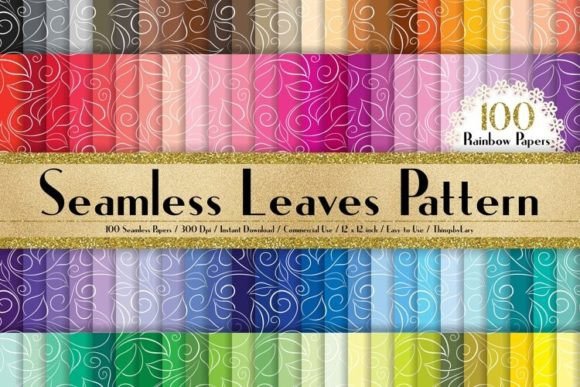
Seamless Leaves Pattern Papers: The Ultimate Resource for High-Quality Digital Design
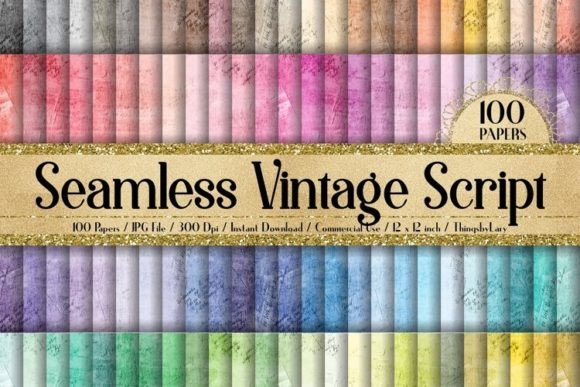
If you are looking to elevate your digital projects with organic, nature-inspired textures, Seamless Leaves Pattern Papers offer a versatile solution that bridges the gap between professional aesthetics and creative freedom. This comprehensive pack is designed for creators who demand precision, offering 100 unique JPG images featuring distinct leaf motifs in 100 different colors. Whether you are a graphic designer crafting a brand identity, a small business owner creating marketing materials, or an educator developing engaging worksheets, having access to high-resolution, tileable patterns is essential.
The core value of this collection lies in its technical specifications and flexibility. Each paper is meticulously created at a standard size of 12 x 12 inches (30.48 cm) with a robust 300 dpi resolution. This ensures that whether you are printing a single invitation card or scaling up for a large-format banner, the image remains crisp and free from pixelation. However, simply downloading a file does not guarantee success. Many users overlook critical details regarding file formats, tiling capabilities, and intended usage, which can lead to subpar results.
Avoiding Common Pitfalls in Digital Paper Selection
When sourcing digital assets, it is easy to get caught up in the visual appeal of a thumbnail without verifying the underlying quality. A frequent mistake involves purchasing low-resolution files that look fine on a screen but fail miserably when printed. If you attempt to print a 72 dpi image at full size, the result will be blurry and jagged. By choosing Seamless Leaves Pattern Papers with their guaranteed 300 dpi resolution, you eliminate this risk entirely. Always check the metadata or product description to confirm the DPI before purchasing, especially if your project involves physical media like fabric, stationery, or packaging.
Another significant misunderstanding relates to the concept of "seamlessness." Not all patterned backgrounds are truly seamless. Some designs have visible hard edges where the image repeats, creating obvious grid lines when tiled across a larger area. This flaw is particularly damaging for web backgrounds, wallpaper design, or textile printing. The specific pack mentioned here is built with true seamless technology, allowing you to tile them infinitely to achieve whatever size you require. Without this feature, you would be forced to manually edit each corner to hide the joins, a time-consuming process that often results in inconsistent coloring or texture breaks.
Understanding Format Limitations and Workflow Efficiency
The format of your digital asset dictates how easily it integrates into your workflow. This pack is delivered as a single zip file containing 100 JPG images. While JPG is a universally compatible format suitable for most design software, it is worth noting that it is a raster format, meaning it loses quality if you scale it up beyond its original dimensions without proper interpolation. Unlike vector files, you cannot resize these leaf patterns indefinitely while maintaining perfect sharpness at every point.
To avoid frustration, ensure your design software supports batch processing or has tools to handle multiple JPGs efficiently. If you are working on a project requiring transparency, remember that standard JPGs do not support alpha channels. You may need to convert the background to transparent using editing tools if you plan to layer these leaves over other elements. Failing to account for this limitation can lead to white boxes appearing behind your designs, ruining the aesthetic. Always verify if your specific application requires PNG or TIFF formats, though for general printing and web use, the provided JPGs are highly efficient.
Maximizing Versatility Across Industries
The utility of these digital papers extends far beyond simple scrapbooking. Because they are seamless and high-resolution, they are ideal for textile design. Manufacturers can take these 12 x 12 inch patterns and scale them up to cover entire bolts of fabric for clothing, curtains, or upholstery. The 300 dpi resolution ensures that the color gradients in the leaves remain smooth, preventing banding artifacts that can cheapen the final product. For entrepreneurs in the fashion or home decor space, this means you can prototype designs quickly without paying for expensive custom illustrations.
Marketers and bloggers also benefit significantly from this resource. Creating consistent branding requires a cohesive visual language. Using a set of 100 coordinated leaf patterns allows you to create a unified look across email newsletters, social media graphics, and blog headers. Instead of searching for individual images that might clash in tone or style, this pack provides a curated library. You can select a deep forest green for a corporate report or a vibrant lime for a summer campaign, ensuring your communication materials remain professional yet visually engaging.
Evaluating Quality Before Commitment
Before integrating these patterns into your commercial projects, it is wise to perform a quick stress test. Download a sample and try tiling it in your preferred software. Check the corners to ensure there are no visible seams or repeating artifacts. Then, zoom in to 100% view to inspect the detail of the leaf veins and shading. If the image holds up under scrutiny, it is ready for production. This step prevents costly errors where a client receives a print job with visible repetition or blurriness.
Furthermore, consider the color accuracy. Digital screens render colors differently than printers. What looks like a soft sage green on your monitor might appear slightly different on paper. Since this pack offers 100 different colors, you have the advantage of testing various shades to find the one that matches your brand guidelines perfectly. Take advantage of this variety to build a palette that works harmoniously together, rather than relying on a single generic green.
Practical Steps for Successful Implementation
To get the most out of Seamless Leaves Pattern Papers, start by organizing your files immediately after extraction. Create folders based on color families or specific use cases, such as "Print," "Web," or "Textiles." This organization saves valuable time during the creative process. When applying the patterns, utilize the tiling features available in design applications like Adobe Photoshop, Illustrator, or Canva. Most modern tools allow you to drag and drop a pattern fill, instantly covering your canvas with the seamless design.
For large prints, such as wall murals or backdrops, rely on the 300 dpi resolution to maintain clarity. Do not stretch the image; instead, let the software handle the scaling while keeping the aspect ratio intact. If you need to print at a massive scale, consider splitting the design into manageable sections if your printer requires it, though the seamless nature of these files usually allows for direct large-scale output. Finally, always keep a backup of your original downloaded zip file. Once you have customized your design, save it as a separate file to preserve the source material for future edits.
By understanding the technical strengths of this pack and avoiding common pitfalls related to resolution and tiling, you can produce high-quality work that stands out. Whether you are a hobbyist making greeting cards or a professional running a design agency, this collection provides the reliable foundation needed to execute your vision effectively. The combination of 100 unique colors, precise measurements, and seamless construction makes it a smart investment for anyone serious about digital design.