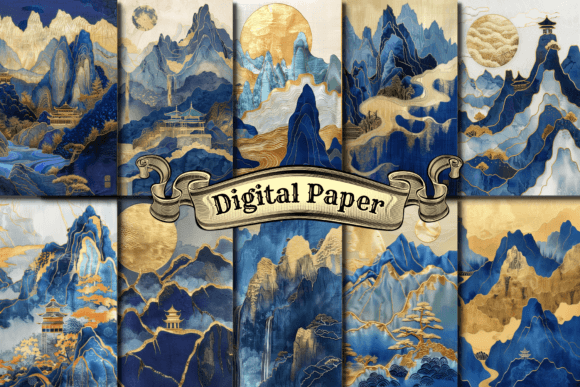
Chinoiserie Digital Paper: A Comprehensive Evaluation
In the landscape of digital design resources, Chinoiserie Digital Paper represents a specific category of high-resolution assets designed to replicate the aesthetic of 17th and 18th-century European interpretations of Asian art. This style is characterized by intricate patterns featuring pagodas, exotic birds, floral motifs, and delicate landscapes rendered in distinct color palettes often dominated by blues, golds, and reds. For designers, crafters, and entrepreneurs, these digital files offer a versatile foundation for creating visual content that evokes elegance, history, and cultural fusion.
Before integrating such assets into a workflow, it is essential to understand the technical specifications and practical applications associated with this format. The product details typically indicate a set containing ten unique JPG and PNG digital papers, each measuring 4000 x 4000 pixels. These dimensions are significant because they provide sufficient resolution for large-scale printing without pixelation, making them particularly suitable for Print on Demand (POD) ventures where image quality directly impacts customer satisfaction.
Understanding the Technical Specifications
The core value of Chinoiserie Digital Paper lies in its file structure and resolution. A standard 4000 x 4000 pixel image translates to approximately 13.3 megapixels. At a standard print resolution of 300 DPI (dots per inch), this allows for a print size of roughly 13 inches by 13 inches. While this may seem modest for massive billboards, it is more than adequate for most commercial applications, including t-shirts, phone cases, fabric prints, and wall art up to poster size.
The inclusion of both JPG and PNG formats within the set offers flexibility. JPG files are generally smaller in file size and ideal for web use or simple background textures where transparency is not required. Conversely, PNG files support alpha channels, allowing users to remove backgrounds if the pattern includes non-pattern elements like isolated birds or pagodas. This dual-format approach ensures compatibility across various software environments, from Adobe Photoshop to Cricut Design Space.
Evaluating Use Cases and Applications
The versatility of these digital papers extends across multiple industries. Understanding where they fit best helps potential buyers determine if the asset aligns with their specific goals.
- Print on Demand (POD) Products: The high resolution makes these patterns an excellent choice for POD platforms like Redbubble, Etsy, or Printful. They can be applied to T-shirts, mugs, tote bags, and homeware items. The repetitive nature of the pattern ensures seamless tiling, which is crucial for products like fabric or wrapping paper.
- Crafting and Cutters: For enthusiasts using Silhouette Cameo or Cricut machines, these digital papers serve as the base for die-cut projects. Users can overlay text or cut shapes out of the patterned material for scrapbooking, card making, or home decor accents.
- Digital Design and Web Development: Graphic designers can utilize these assets for website backgrounds, social media banners, and email templates. The classic aesthetic adds a layer of sophistication to digital branding without requiring complex illustration work.
- Stationery and Planners: The intricate details of Chinoiserie designs work well for notebook covers, planner inserts, and stationery sets. The visual density of the pattern provides a rich backdrop for functional writing spaces.
Weighing Benefits Against Tradeoffs
When evaluating Chinoiserie Digital Paper, it is important to balance the advantages against potential limitations to make an informed decision.
Benefits:
The primary advantage is efficiency. Acquiring a pre-made set of ten high-quality patterns saves hours of manual illustration time. The consistent style across the set ensures brand cohesion for projects requiring multiple related images. Furthermore, the royalty-free nature of most digital paper sets allows for unlimited commercial use, provided the license terms are respected, offering a high return on investment for small business owners.
Tradeoffs and Considerations:
A significant consideration is the specificity of the style. Chinoiserie is a distinct historical aesthetic. If a project requires a modern, minimalist, or abstract look, these patterns may feel incongruous. Additionally, while 4000 pixels is high for many uses, it may fall short for ultra-large format printing, such as building wraps or large-scale murals, unless the image is upscaled using advanced algorithms that might introduce artifacts.
Another factor is the complexity of the pattern. Intricate designs can sometimes cause issues when printed on certain materials or scaled down too much. On very small items, such as jewelry tags or small phone case stickers, the fine details of the Chinoiserie motif might become muddy or indistinguishable.
Situational Fit: When to Choose This Asset
This digital paper set is a strong fit for creators who need immediate access to a cohesive, vintage-inspired theme. It is particularly advantageous for:
- Seasonal Collections: The ornate nature of the design pairs well with holiday themes, especially those involving travel, heritage, or autumn aesthetics.
- Branding for Niche Markets: Businesses selling tea, ceramics, books, or luxury goods often benefit from the refined look of Chinoiserie patterns.
- Rapid Prototyping: Designers working under tight deadlines can quickly mock up packaging or marketing materials using these ready-to-use backgrounds.
Alternatives and Decision-Making Insights
While Chinoiserie Digital Paper is robust, it is not the only solution for every scenario. Alternatives worth considering include:
Custom Illustration: If brand uniqueness is the top priority, hiring an illustrator to create a custom pattern is superior. This avoids the risk of other competitors using the exact same digital assets, ensuring a one-of-a-kind identity. However, this comes at a significantly higher cost and time commitment.
Generic Floral or Geometric Patterns: For projects that require a lighter touch or a more contemporary feel, simpler geometric or generic floral patterns might be more appropriate. These are often less visually "heavy" and allow text or product imagery to stand out more clearly.
Vintage Vector Sets: If scalability is a major concern beyond 4000 pixels, vector-based SVG files might be preferable. Vectors can be resized infinitely without losing quality, though they may lack the specific texture and depth of rasterized digital papers.
Final Assessment
Selecting the right digital asset depends heavily on the intended output and the desired aesthetic tone. Chinoiserie Digital Paper serves as a reliable tool for professionals and hobbyists alike who seek a sophisticated, historically inspired look. Its high resolution supports a wide range of physical and digital products, making it a valuable addition to a design library.
However, success relies on matching the asset's specific style to the project's requirements. If the goal is to evoke tradition, elegance, and intricate detail, this set is highly effective. If the project demands absolute originality or a radically different visual language, exploring custom or alternative stock options may yield better results. By carefully considering these factors, users can determine whether this specific collection aligns with their creative vision and commercial objectives.